By Cash Martin, TPPA Intern
The Texas Pork Producers Association (TPPA) recently welcomed the first cohort of participants in the inaugural ChopTalk Advocacy Academy, a new leadership and advocacy initiative funded by a grant from the National Pork Board. The program is designed to equip youth exhibitors with the skills and experiences needed to become influential voices for the pork industry.
The first session, a four-day short, course brought together 11 youth leaders from across Texas, including: Alaya Prado of Liberty Hill, Emma Perez of Sinton, Kenley Krohn of Lamesa, Kotton West of Taft, Madeline Rakowitz of Salado, Madison Hunzeker of McKinney, Malaina Baker of Blue Ridge, Reese Huffaker of Post, Reese Sagebiel of Fredericksburg, Sarah Albus of Hankamer, and Weston Lackey of Haskell.
The program was created to transform passionate young pork exhibitors into confident advocates who can help broaden knowledge between pork production and consumers. The experience began in Austin with a welcome session focused on relationship building, leadership expectations, and an introduction to the role advocates play in shaping public perceptions of agriculture for the next two sessions. Participants quickly connected while preparing for a week of learning opportunities centered on the pork industry.
The first full day focused on understanding the broader pork industry and the importance of consumer engagement. Participants heard from industry leaders about the impact of pork production, the role of commercial producers, and why authentic storytelling is essential in today’s marketplace.
The group traveled to San Antonio, where they met with the H-E-B Wellness Team and participated in a hands-on culinary demonstration led by Chef Patrick and Matt Davis. During the session, advocates prepared pork-based dishes while learning how retailers communicate nutrition, convenience, and flavor to consumers. Later that afternoon, participants explored pork nutrition, consumer perceptions, and common misconceptions surrounding the industry.
The day concluded with a visit to Southside Market & Barbeque, Texas’ oldest barbecue joint and sausage processor, giving participants a firsthand look at the connection between production agriculture and consumer food experiences.
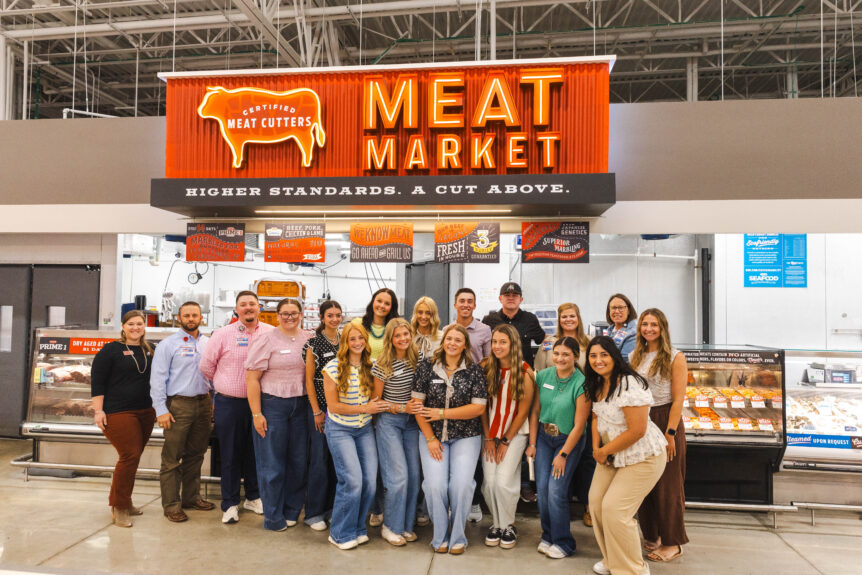
Day three shifted the focus toward retail marketing and consumer behavior. Participants toured a San Antonio H-E-B store, where they examined meat case layouts, product labeling, merchandising strategies, and pork placement compared to competing proteins. Throughout the visit, advocates were challenged to think like marketers and identify opportunities to better connect with pork products.
Additional sessions explored H-E-B’s commitment to Texas-made products, current retail trends, and the evolving preferences of today’s consumers. Participants also learned about the unique pathway Texas show pigs take after the show ring through discussions on livestock marketing and pork processing.
One of the week’s most interactive activities challenged students to develop strategies for promoting pork to modern consumers. While hearing from the team with Texas Livestock Marketing Association, advocates analyzed existing marketing campaigns and explored ways to communicate the pork industry’s story to audiences beyond agriculture.
The fourth day highlighted the people and businesses that connect pork producers to consumers. Participants met with Julie Halfmann of Prime Pork and Meats to learn about local pork production, processing logistics, and community engagement efforts.
The group then traveled to Green’s Sausage House in Zabcikville and Churchrow Tejas BBQ in Austin, where participants experienced many Texas traditions through Czech kolaches and fresh pork sausage while learning about the history and cultural significance of pork products in local communities. Later that afternoon, the advocates met pitmaster Miguel Vidal at Churchrow Tejas BBQ for lunch.
As the week progressed, attention turned toward advocacy and communication. Through media training and storytelling workshops, participants practiced interviewing techniques, on-camera communication skills, and methods for translating their agricultural experiences into meaningful conversations with consumers. They also explored how advocacy skills can strengthen resumes, scholarship applications, leadership opportunities, and future careers.
The program concluded with a capstone project announcement in which participants team up to create communications materials over the following:
- Your Guide to Choosing, Cooking, and Loving Texas Pork
- The Stories of Texas Pork
- Uniquely Texas Pork: Culture Focused
- Pork Meals Made Easy for College Students
The team will meet for their final session in Houston from October 18-21 to further their education and present their capstone projects. The Texas Pork Producers Association is always honored to have the opportunity to invest in the next generation of industry leaders and ensure that authentic voices continue telling the story of pork production across Texas and beyond.